
Terry Matsunaga noticed his autistic son was having difficulties securing a job after graduating from the University of Arizona. It wasn’t due to a lack of talent, but a lack of social skills.
“Sometimes he tries and before he even gets an interview, they hang up on him on the phone,” Matsunaga said. As a professor of neurosurgery and biomedical engineering at the U of A, Matsunaga realized that other college students on the Autism spectrum would face similar problems after graduation — and that there was something he could do to help.
He contacted David Hahn, dean of the College of Engineering, and Wendy Parent-Johnson, former director of the Sonoran Center for Excellence in Disabilities, about the idea. Both were receptive, and in 2020 the three of them founded what would become Internships Designed with Engineering Autistic Students in Mind.
In 2023, the IDEAS in Mind program began accepting students. Three years later, it has helped dozens of autistic students find internships at engineering companies — and is likely to continue for the foreseeable future despite a recent shift in the political climate.
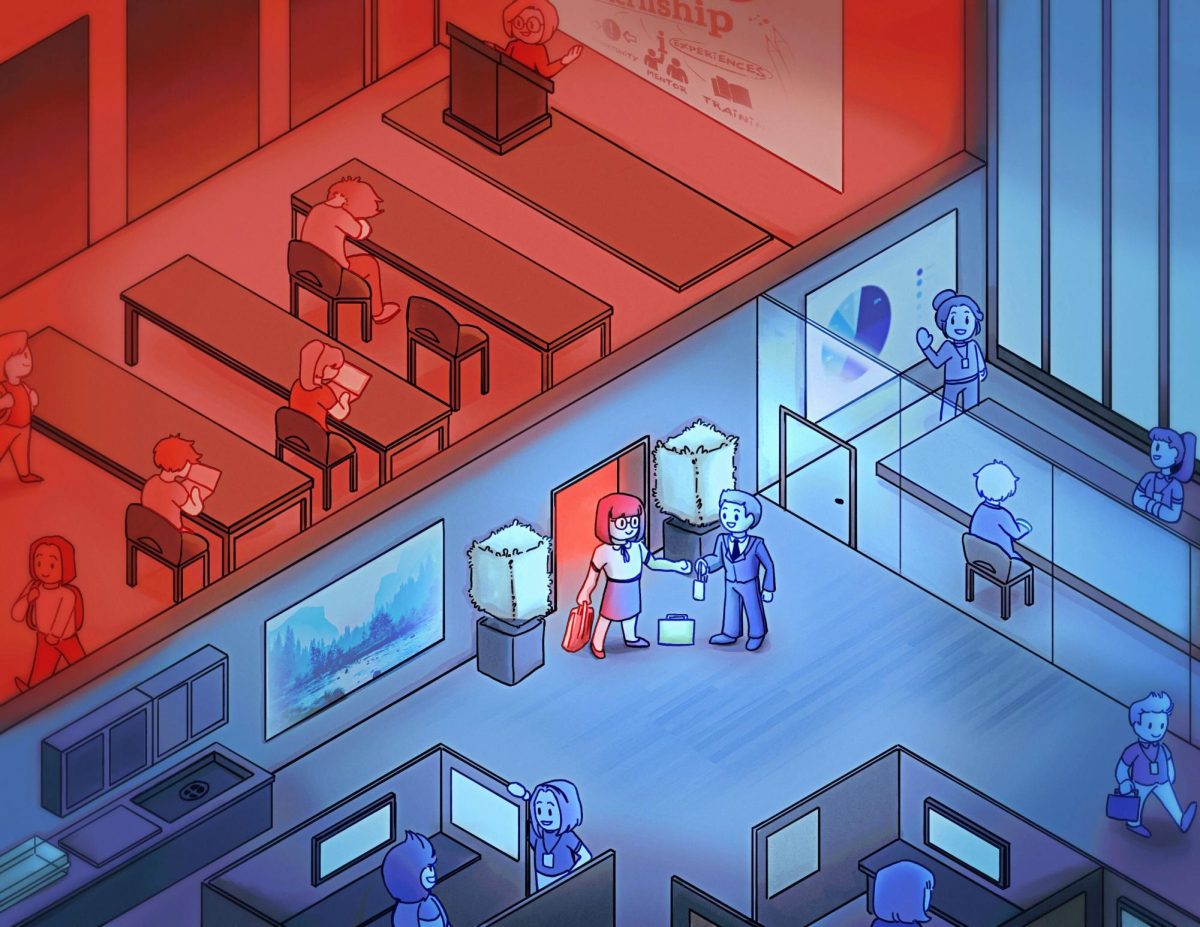
The IDEAS in Mind program offers support and vocational training to autistic students who want to secure internships at engineering companies. Though most applicants are engineering majors, a major in engineering is not required. Before the fall of 2025, students took a weekly Career Development class, but last semester’s cohort met twice a month for a workshop. Students can also have one-on-one consultations with Tyler Le Peau, a student support coordinator from the ENGAGED program, which provides services for underrepresented engineering students.
“They’ve done really cool workshops to kind of prepare us for what workplace environments are like […] and I think it’s a really wonderful asset, because not a lot of programs, I feel like, do that,” said Shaddai Demerath-Shanti, a junior and part of the fall 2025 IDEAS in Mind cohort.
“At least in my experience, I haven’t had a program that has focused on, ‘Okay, this is what your life after college is going to look like.’ So that was really cool,” he said.
Other students take a more practical view. “The largest value in it, I would say, is getting your resume reviewed and getting to speak with people in-industry to see whether or not there are any changes you can make,” Duncan Yuen said, also in the Fall 2025 cohort. “Because oftentimes if you’re applying to places, if they decline you, they’re not going to tell you why exactly that they did so.”
IDEAS in Mind also works with the companies involved, providing inclusive leadership and hiring training for those that want it. “I actually pretty much cold-called everybody,” said Matsunaga, who formerly served as the principal investigator. Most of the engineering companies he contacted never replied, but he was able to find interested parties at Raytheon and Texas Instruments who agreed to participate in the IDEAS in Mind program.
This dual-pronged approach is what makes the program special, according to Loretta Alvarez, the Transition Program Manager at the Sonoran Center for Excellence in Disabilities and one of IDEAS in Mind’s direct contacts to corporations. “It’s not just up to the students to adjust and change everything about them to fit into this box, and it’s not just up to the companies to provide everything despite not knowing even where to start,” Alvarez said. “It’s meeting both of them where they’re at and trying to address the needs from there.”
IDEAS in Mind is also open to ideas from unexpected places. In the spring of 2025, the program hosted an improv class. According to Le Peau, a peer mentor suggested it could help the students build up their social skills. She contacted a professor from the English department who hosts improv workshops as a hobby to make it happen. “And it really led to me understanding how to be more flexible in the moment myself,” Le Peau said, “and also just helping students who might benefit from that type of exercise.”
After the political winds shifted in the fall of last year, staff and faculty at IDEAS in Mind worried that companies might withdraw, especially those with US government defense contracts. “We would get calls from their legal departments, saying ‘we can’t hire this year because of the changing environment,’” Matsunaga said, but he added that they eventually returned to the program. “When they figure out what a lot of these things meant, they start to understand what they could do and what they couldn’t do.”
Jason Cunningham, a junior from the spring 2025 cohort, is cautiously optimistic about the future of IDEAS in Mind. “There may be restrictions on what this program can and can’t do.” Cunningham believes that autistic students might have more or fewer options depending on the fluctuating political situation. “So I’m not worried about the program’s survivability as a whole,” Cunningham said. “Just am I at the right time at the right place?”
Others are more worried; one student who had initially agreed to an interview for this article ended up declining after discussing it with their parents. And one of the first things that Demerath-Shanti asked on joining the program was whether and how it would be affected by recent events. “And I definitely worry about that, and I feel concerned for the program for myself, for the other students,” Demerath-Shanti said, “but I think it’s one of those small acts of resistance, in a way, to just keep going despite the political climate.”
That sentiment is echoed by the organizers of IDEAS in Mind. “You know, our program is actually funded by an NSF grant, and so we were unsure about our funding moving forward, but so far that has not ended up being the barrier that we thought it would be,” Alvarez said.
“Someone’s got to be consistent about it […] and it might as well be me.” Matsunga said.