

On any given afternoon at the University of Arizona, students browse boutiques and plan outfits for sorority events, game days and nights out.
For many, fashion is a form of self-expression. But others say keeping up with campus trends carries financial and mental pressure.
From sorority recruitment to themed fraternity parties and nightlife, students note clothing signals belonging. The pressure to dress a certain way affects how they spend money and how they perceive themselves.
“The culture at U of A is definitely different from what I experienced back home in Texas,” Madigan Davis, a junior UA student and member of campus Greek Life, said. “Everyone here is the first to know about something new.”
Before coming to Tucson, Davis stated she had never heard of brands common on campus, such as White Fox, Princess Polly and Edikted. Seeing other students dress in similar styles made her question her own wardrobe.
“When everyone around you is wearing black boots, mini skirts and see-through tops, and you don’t have that type of clothes, you’re going to feel like the odd one out,” Davis said.
Over time her closet has changed.
“I can say I now own the black boots, the mini skirt and the see-through tops,” Davis said.
Greek Life events add another set of expectations. Recruitment, work week, bid day and themed fraternity parties often require specific outfits.
“For recruitment, they have themes and color schemes you need to fit,” Davis said. “I bought a dress that I thought was gold, and they told me it was too yellow. I had to buy another one. They said no again.”
Davis mentioned that repeatedly purchasing outfits for single events is unrealistic for many students. “There’s no way people can just get three $80 dresses for one weekend,” Davis said.
While no one forces her to buy new clothes, there is an understanding that presentation matters.
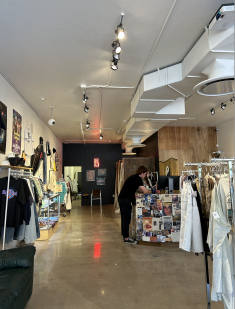
Grace Ju, a junior UA student who works at the Student Union Memorial Center, explained the pressure extends beyond Greek Life.
“Everyone is so on trend,” Ju said. “There are so many boutiques on campus, and you can tell how put together everyone looks.”
Ju noted she often finds herself spending money she had planned to save.
“A lot of it is stuff I don’t necessarily need,” Ju said. “It’s more so want. But I feel social pressure to buy it.”
Originally from Saipan, Northern Marana Islands, Ju mentioned adjusting to campus culture in the United States while managing expenses has been difficult.
“I’m not from a rich family, and I have a hard time saving money,” Ju said. “It takes a large toll on my mental health. It makes me compare myself to people who are not in the same financial situation as me.”
Ju expressed that fashion trends can highlight financial differences among students. “Being around so many sorority girls has impacted me in a way to spend more,” Ju said.
Madison Hawkins, a senior UA student and employee at Boutique 816 and Collette Clothing on University Boulevard, explained how campus events directly influence store inventory.
“At the start of the school year we have recruitment dresses, bid day outfits and game day items,” Hawkins said. “Closer to winter, we stock up for formals.”
The boutiques are geared to sell according to the events and seasons that are at hand. Hawkins stated trends move quickly among students.
“One girl will tell her friend, and her friend will have to have the same top,” Hawkins said. Even working in retail, she stated she feels influenced.
“I do buy some clothes from the boutiques,” Hawkins said. “I get influenced by the inventory.”
Elizabeth Heuisler, a professor of practice in Fashion Industry Science and Technology, explained fashion pressure extends beyond just women and often begins long before college.
“I do think fashion impacts students, and I don’t think it is just females,” Heuisler said. “At one point it was more females, but now it’s affecting both male and female students. People are becoming more concerned with how they look and how others judge them.”
Social media has intensified that pressure, Heuisler claimed, especially through influencers who promote certain brands and styles.
“A lot of these people are being paid to wear certain things,” Heuisler said. “That sends a very false image. It’s not truly something they would normally go out and buy.”
Young people often feel caught between wanting individuality and wanting to fit in, Heuisler added.
“That’s when it starts to affect you mentally,” Heuisler said. “It becomes, ‘I can’t go to school because I don’t have this,’ or ‘I can’t go out because I’m not wearing the right thing.’”
Heuisler stated widespread fashion trends keep students in “lockstep.”
“You want to have some individuality, but you also want to be like everybody else. There’s a fine line there, and sometimes we take it too far,” Heuisler said.
First impressions often reinforce those anxieties, she stated, because people tend to assess each other on outward appearance such as clothes.
“I think everyone does it,” Heuisler said.
Students mentioned pressure builds through constant comparison in classrooms, at social events and on social media.
For Davis, the expectations extend into nightlife.
“If you don’t have it, you’re going to be looked at as weird because everyone else has it,” Davis said of trending items.
Fashion can be creative and fun, but it can also bring financial strain and quiet pressure for many students, especially for those balancing tuition, rent and part-time jobs.
“When you’re surrounded by boutiques and people who look put together all the time, you feel like you have to keep up,” Ju said.
Follow the Daily Wildcat on Instagram and Twitter/X