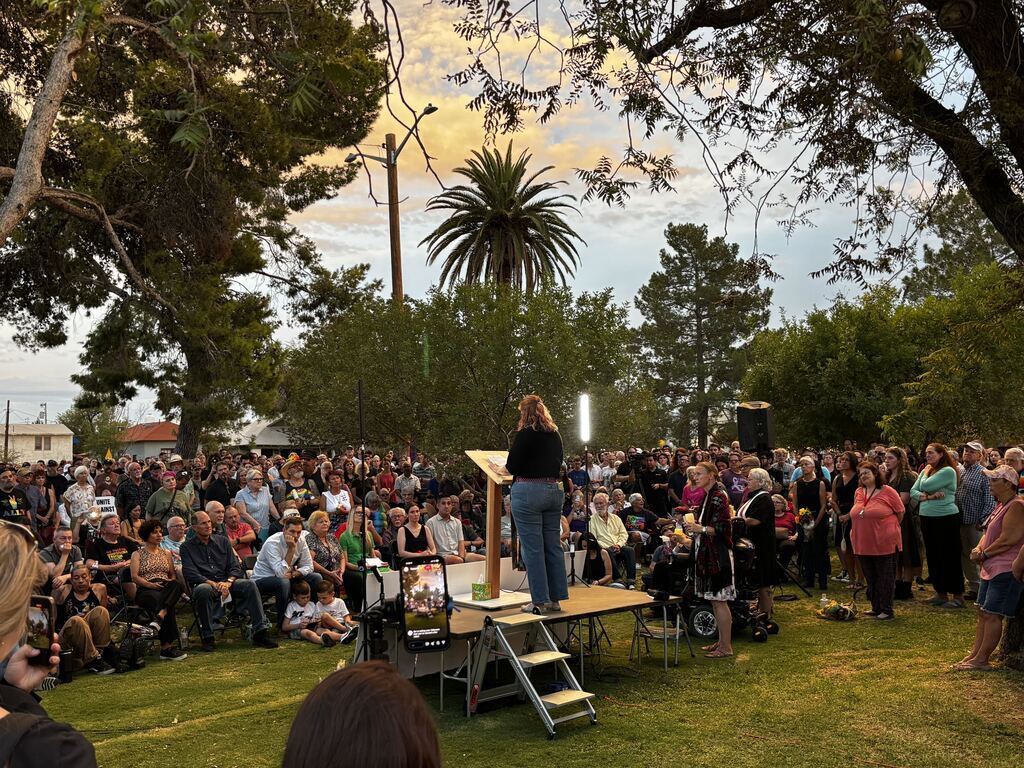


The University of Arizona’s Special Collections hosted a discussion panel on downwinders with former Navajo Nation President Jonathan Nez and former New Mexico Senator Tom Udall on Sept. 25.
Downwinders is a term referring to those who were exposed to radiation while the United States held atmospheric nuclear testing. This includes Navajo uranium miners and those who lived nearby any testing in the western United States.
Guests who attended the panel were greeted with the “Trailblazers: Stewart L. Udall’s Environmental Leadership and Legacy” exhibit honoring the life of speaker Tom Udall’s father, Stewart Udall, who is most known for his work as the Secretary of Interior under the Kennedy and Johnson administrations.
The event was titled “The Myths of August,” and discussed the legacy of work done to bring justice to those affected by America’s nuclear testing during the Cold War.
Nez and Tom Udall both took up the fight to compensate those impacted by radiation from nuclear testing. In a 2018 hearing, then president-elect of the Navajo Nation and the former New Mexico senator, spoke at a congressional hearing that looked to expand compensation in various different aspects including types of cancer and the type of workers allowed to receive coverage.
At the panel, both discussed their experiences with fighting for downwinders.
Former U.S. Senator Tom Udall spoke about how he and his father would meet with cancer patients who had not yet received any government compensation.
“We met with a group of around 300 or 400 people and all we really did was listen. It was a very emotional meeting because people had fallen ill, they died quickly,” Tom Udall said. “It seemed like in comparison to other places in the United States, there was a real epidemic of cancer.”
Nez specifically pointed out the plights of those who have been and are still affected while living in the Navajo Nation.
“Growing up, I was just like, ‘maybe cancer is just a normal thing,’ right? But as I started learning more about it and getting into government […]. I call it the exploitation of the Navajo people for the greater good,” Nez said.
Nez highlighted that 500 abandoned uranium mines are currently sitting on the reservation. According to Nez, he believes that this was a money problem, as the cost of cleaning one uranium mine was over 10 million dollars.
Both Nez and Udall are worried for the future of downwinders and their cases, as recent legislation hurts what would happen to those looking for compensation.
Since 1990, all compensation has fallen under the Radiation Exposure Compensation Act.
Now, RECA has been reauthorized under the Big Beautiful Bill of the Trump administration. Specifically, those who want to file claims will have to do so before Dec. 31, 2027.
Nez and Udall worried that, because of layoffs, federal workers will have trouble keeping up with the volume of claims that could be coming in the next 2 years.
When asked about what they’d want for the future of RECA, both expressed a hope to see the deadline moved further and compensation be covered for more and more people rather than the current plans under the Big Beautiful Bill.